There are names that cease to indicate a brand and become a language. Chanel is one of them. A tweed suit, a gold chain interwoven with leather, or a string of pearls are all it takes to recognize its universe. However, the history of Chanel is not a museum of immutable codes. It is the story of a maison that has reinvented itself with every generation, always remaining faithful to the idea with which it was born: liberating women.
Retracing its journey means understanding why a Chanel garment or bag never goes out of style. It also means understanding why more and more people are choosing vintage Chanel instead of buying in boutique.
From its inception to the Blazy era: the evolution of the maison
Gabrielle, Coco, and the jersey revolution (1910-1939)
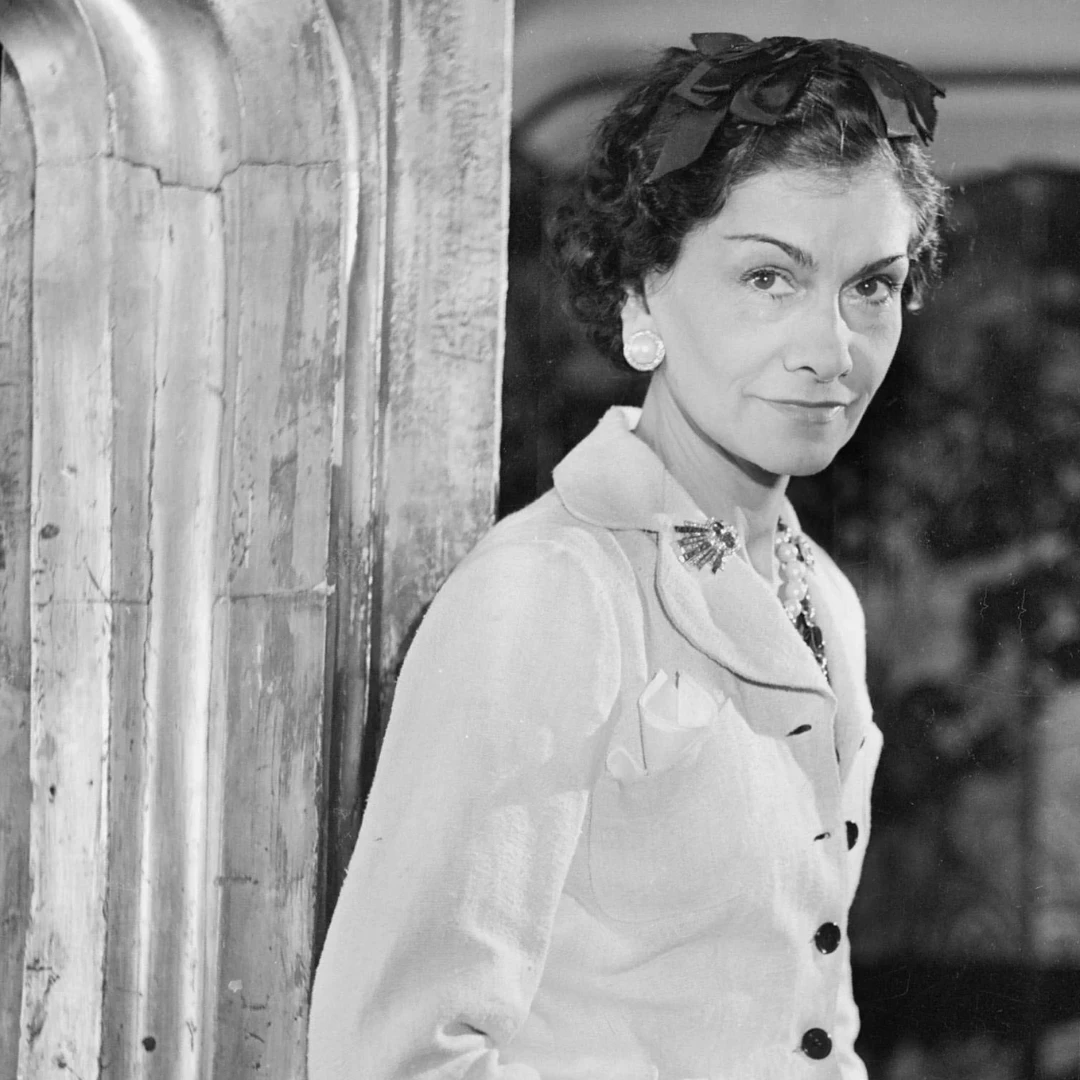
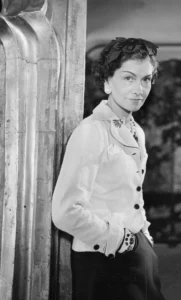
It all begins in 1910 in Paris, with a small hat atelier in rue Cambon. Gabrielle “Coco” Chanel, raised far from the salons of high society, possessed a rare talent: she knew how to subtract. She removed corsets, excessive volumes, and superfluous ornaments, bringing jersey—a fabric previously relegated to men's underwear—into the female wardrobe.
In the Twenties, the maison became an empire. In 1921, Chanel N°5 was born, the fragrance that changed the way scent is conceived. In 1926, the petite robe noire arrived, the simple and essential black dress that became the uniform of modern elegance.
The return and the birth of an icon (1954-1971)
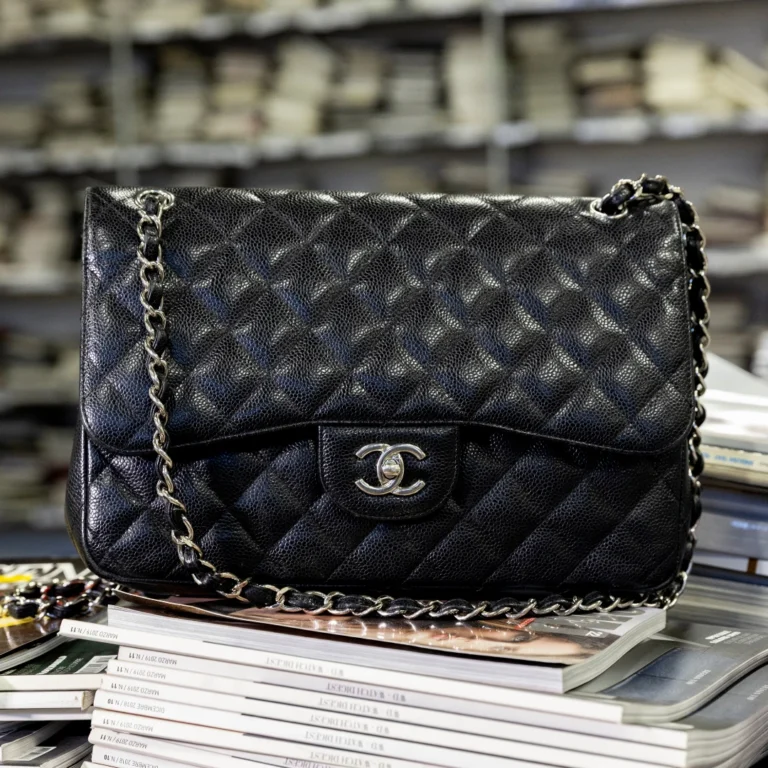
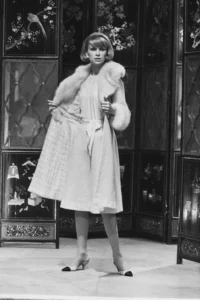
At the outbreak of the war, Coco closed the maison. She returned in 1954, at seventy-one years old, amidst the skepticism of French critics and the enthusiasm of the American public. The tweed suit and the quilted bag with a chain, the 2.55 (named after the month and year of its birth, February 1955), were her answer to a practical question: why should a woman's hands be occupied? The shoulder strap frees the hands, and the rest is history. Coco worked until her death in January 1971.
Karl Lagerfeld, the master of codes (1983-2019)
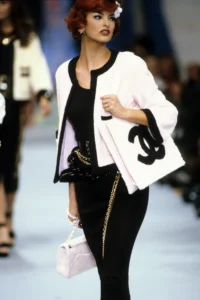
After the founder's passing, the maison went through years of uncertainty. In 1983, Karl Lagerfeld arrived, and for thirty-six years, he led a reverse revolution: he took Coco's symbols, from tweed to camellias, from pearls to chains, and brought them into the present with irony and a pop sensibility. The interlocking CC became the signature on the Classic Flap lock, fashion shows transformed into spectacles (supermarkets, airports, space rockets under the dome of the Grand Palais), and the maison rose to the heights of global luxury.
Virginie Viard, the continuity (2019-2024)
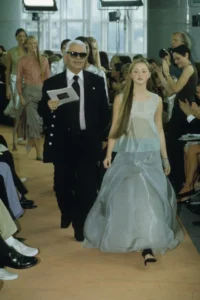
After Lagerfeld's death in 2019, creative direction passed to Virginie Viard, his closest collaborator for years. Her Chanel is intimate and wearable, consolidating the house's commercial success. She left the maison in June 2024.
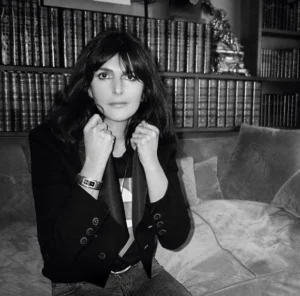
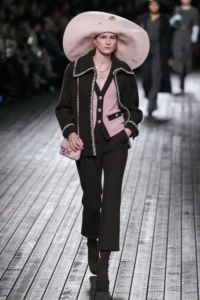
Matthieu Blazy, the new chapter (2025-present)
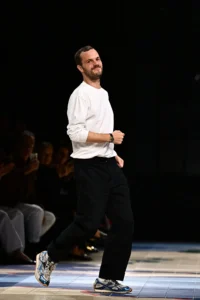
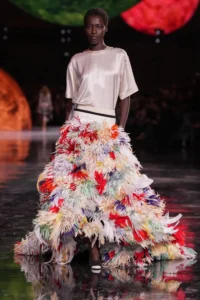
On December 12, 2024, Chanel announced the appointment of Matthieu Blazy, a French-Belgian designer arriving from Bottega Veneta, where he led a highly acclaimed revival. His journey is also marked by experiences at Céline with Phoebe Philo, Maison Margiela, and Calvin Klein. Blazy is only the fourth creative director in the maison's history, following Coco, Lagerfeld, and Viard. His debut, the Spring-Summer 2026 collection, refocused attention on the house's codes with a fresh perspective. The collection's bags, such as the Maxi Flap, triggered a buying frenzy in boutiques. The maison has never stopped reinventing itself while remaining recognizable, and today it does so with a new voice.
Why choose vintage Chanel: memory and value
Wearing a piece of history
Every creative director has left behind details that tell the story of an era. Those seeking vintage Chanel bags or an archival suit will find leathers, craftsmanship, silhouettes, and hardware that mark the transition from one stylistic season to another. A well-preserved vintage piece is a fragment of fashion history that can still be worn.
There is also an almost ecological aspect, beyond the aesthetic. Choosing an existing garment extends the life of an object born to last. It is the most consistent gesture with the idea of luxury as quality, rather than consumption.
The new always costs more
The second reason is more concrete. Chanel price lists have been rising for years, with frequent adjustments. According to industry reconstructions, the Classic Flap Medium cost approximately $2,850 in 2010. After the price increase on April 2, 2026, in the United States, it reached $11,700, more than quadruple in sixteen years. In Europe, the Classic Flap Medium/Large range now exceeds €10,000. These are increases that, for those buying in boutique, add to the previous ones every year.
The pre-owned market offers an alternative. According to some industry analyses, a Classic Flap in excellent condition is often found at a discount between 15% and 30% off the current list price, and discontinued models can cost even less. Furthermore, vintage tends to retain its value well. A note of honesty: not every vintage piece is automatically a bargain. A vintage single flap, an old double flap, and a current Classic Flap are different comparisons, and condition, rarity, and authenticity are what matter. For this reason, it is essential to turn to those who select and verify pieces with expertise.
Choose with awareness
For more than a century, Chanel has told the story of a free woman, and continues to do so through its creative directors. Vintage allows you to enter this story by choosing a specific chapter, with a more reasonable investment and a style that no season can diminish.
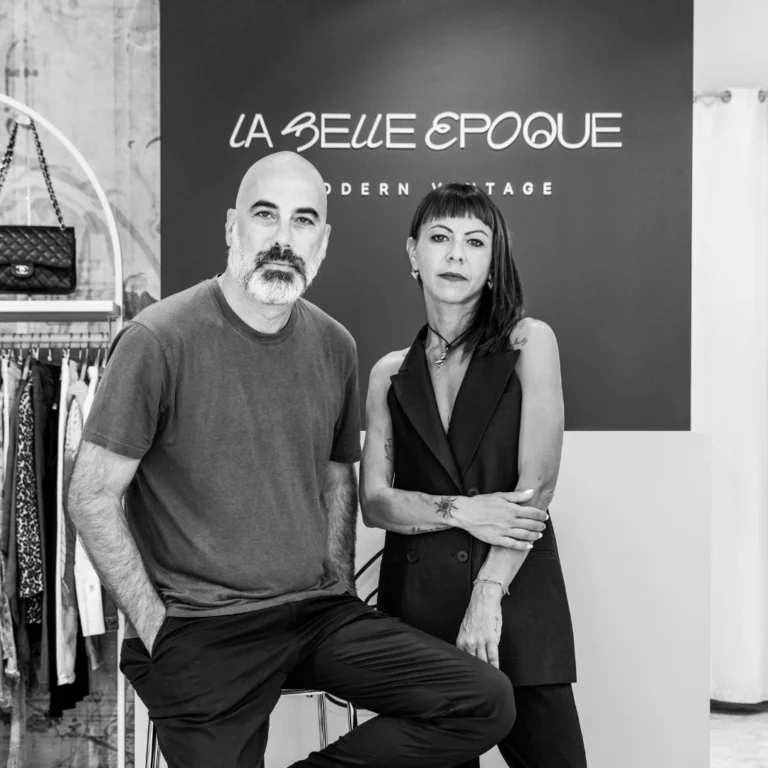
From La Belle Époque, in our boutiques in Milan, Como, and Legnano and online, we select authenticated Chanel pieces ready for a second life. Discover the collection or visit us in-store.
Want to know how to distinguish an authentic Chanel from a fake? Read our complete guide.