There is something deeply reassuring in the return of beloved objects. In the way a bag, intact in its design, perfect in its proportions, emerges from a maison's archives to find its voice in the present. It is not just nostalgia: it is confirmation that certain aesthetic choices transcend the moment they were born.
The luxury vintage market has always known this. Those of us who live for second hand and pre-loved know it even better. And today, in the mid-twenties of the new millennium, we are witnessing an extraordinary phenomenon: the iconic bags of the early 2000s are no longer content to circulate quietly on market shelves and reseller windows. They are returning to the runway. They are returning to campaigns. They are returning into the spotlight, carried by Bella Hadid, Dua Lipa, and anyone who still possesses, or has rediscovered, the courage of declared beauty.
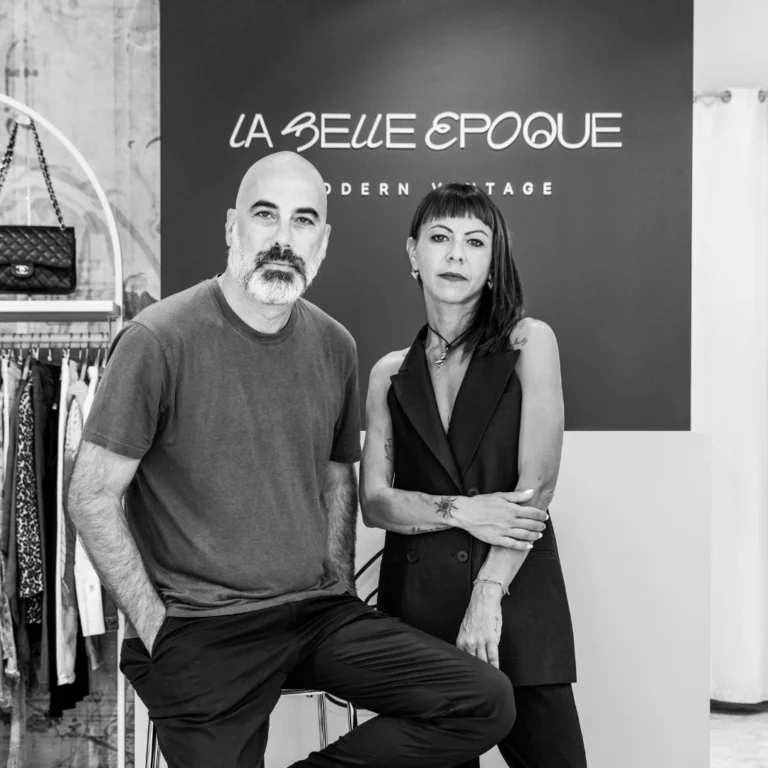
These are the six bags we are following most closely, which you can find — in their original, pre-loved, and authentic versions — in our stores in Milano, Legnano, and Como.
Chloé Paddington — The lock that changed everything
Presented in Phoebe Philo's Fall/Winter 2005 collection for Chloé, the Paddington was likely the first bag to generate a waiting list in the digital era. Its maxi gold lock hanging from the zipper was overtly excessive, intentionally bulky, and absolutely irresistible. At a moment when fashion was discovering the viral power of it bags, the Paddington became the symbol of a new form of collective desire.
Today, the Paddington is among the most sought-after vintage bags in the world: 2025 search data places it at the top of the growth charts in the pre-loved luxury segment, with a revival effect that has translated into a race for original versions on the secondhand market. The soft leather, the slightly slouchy silhouette, that lock that tinkles with every step: everything contributes to making it as recognizable and desirable today as it was twenty years ago.

Fendi Baguette — Not just a bag, a cultural infrastructure
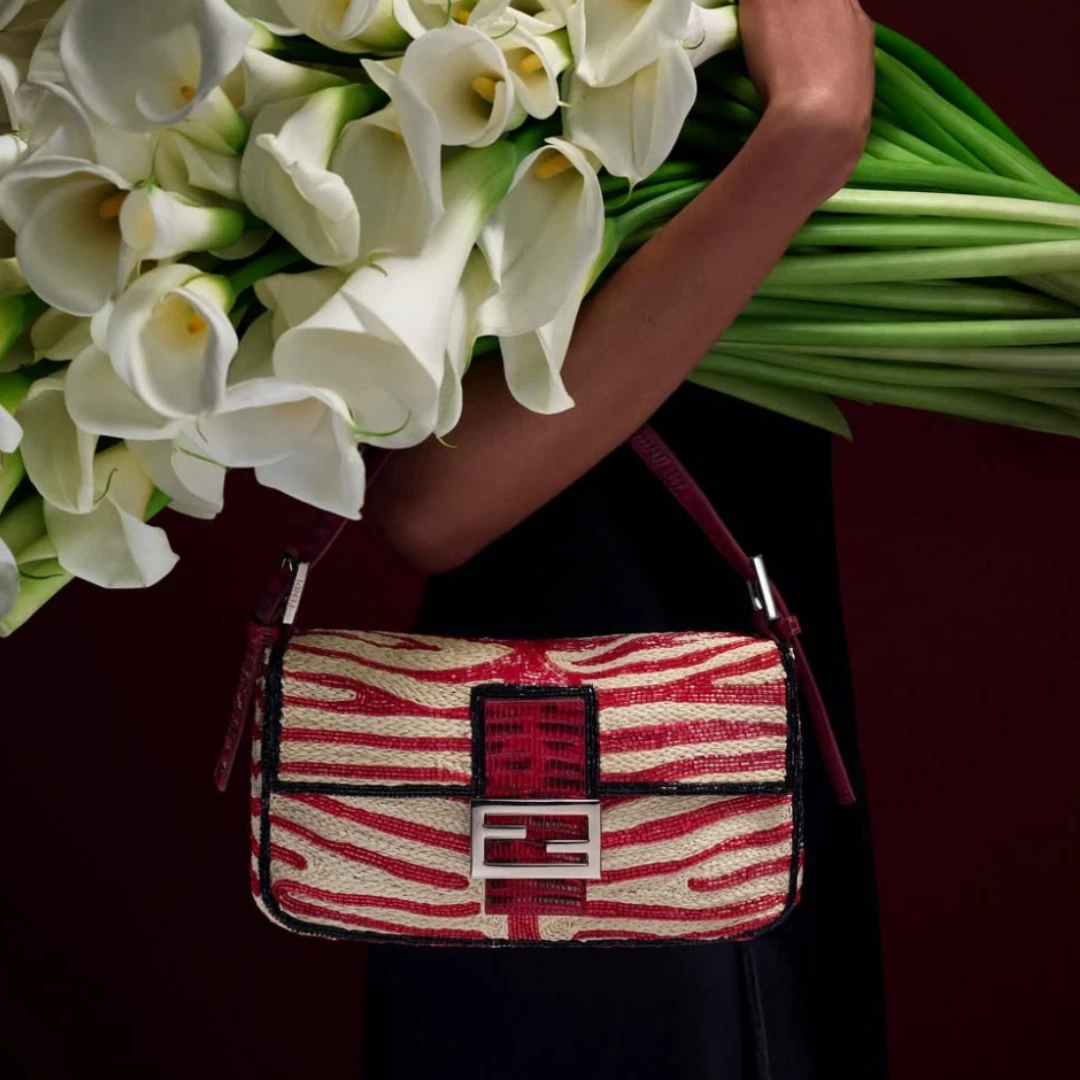
Designed in 1997 by Silvia Venturini Fendi, the Baguette owes its name to the way it is carried under the arm, exactly like Parisians hold a baguette. A compact bag, immediately recognizable in its silhouette, infinitely replicable in denim, sequins, raffia, or embroidered leather — and always, always recognizable from afar.
This week, during Milano Design Week, Maria Grazia Chiuri previewed the new Baguette 26424 Re-Edition at Palazzo Fendi: twenty models, six of which are exclusive to Milano, each enclosed in a special wooden box inspired by art transport crates. The installation designed for Salone del Mobile 2026 tells the story of the Baguette's journey through crates suspended on a moving system, accompanied by a video installation that evokes the precision and rhythm of the atelier.
For those seeking the Baguette in its most authentic form, from the nineties and early two-thousands, with its most experimental and artisanal versions, the vintage market is the place to be.

Saint Laurent Mombasa — The return of the horn handle
There was something almost tribal about the Mombasa when Tom Ford presented it for the Yves Saint Laurent Spring/Summer 2002 collection. The soft hobo silhouette, defined by its horn handle, stood out from other it bags of the era due to the absence of flashy embellishments and excessive details — a relative sobriety, for the Tom Ford of those years, which instead highlighted the quality of the leather and the sculpture of the handle.
In January 2026, Saint Laurent reintroduced the Mombasa with a campaign starring Bella Hadid. In just a few weeks, the reissue bags appeared on the arms of Rosé in Seoul and Kiko Mizuhara in Paris. The 2026 version updates the original horn handle with a leather-wrapped replica, while maintaining the curved stitching construction and the crescent shape that made the silhouette famous.
We discussed this in detail in this article.

Stella McCartney Falabella — When a bag becomes an ethical stance
The Falabella was born in 2009 as a response to a specific question: is it possible to make a luxury bag without animal leather, without compromising desire? Stella McCartney's answer was — and continues to be — yes. The metal chain running along the edges, the recycled fabric lining, the immediately identifiable trapezoidal profile: everything about the Falabella speaks of a consistency of values even before aesthetics.
In a vintage market that has embraced sustainability as a founding value — buying pre-loved is, by definition, the most responsible act one can perform toward a bag — the Falabella occupies a unique position. It is a bag built to last, designed to be repaired and re-worn, crafted with materials that age gracefully. Finding one in good condition on the secondhand market is finding the quintessence of circular luxury.

Balenciaga City — The bag that redefined cool
In 2001, Nicolas Ghesquière introduced the City with an apparently simple gesture: he took the format of a motorcycle bag, crafted it in incredibly soft leather with brass studs, and created something that looked like nothing else seen before. The City became the symbol of an aesthetic — the bag of photographers, fashion journalists, and women who didn't want to look like they were carrying a luxury bag, but were.
Since July 2025, Pierpaolo Piccioli has taken the reins of Balenciaga, succeeding Demna and bringing his vision of poetic couture to a maison that defined street aesthetics over the last decade. His arrival has inevitably reignited interest in the pre-Demna archive — and the City, in its original Ghesquière version, is among the most sought-after pieces at the moment. On the vintage market, the 2000-2010 versions in distressed lambskin command the highest prices — and the reasons are obvious to anyone who has held one.

Gucci Horsebit — The buckle that never goes out of style
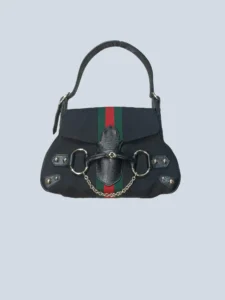
The Horsebit motif — the double ring with bar — first appeared on a Gucci loafer in 1953, quickly becoming one of the maison's most recognizable elements. Its application to bags has spanned decades and creative directions: Tom Ford elongated it into an east-west silhouette in the early 2000s, while Alessandro Michele dramatized it in his collections.
With Demna's debut at Gucci, presented during Milano Fashion Week, the Horsebit returned as the collection's primary hardware language, applied to structured bags in various finishes — from embossed leather to GG canvas — as a modular platform for materials. The result on the vintage market is predictable: the original Tom Ford and Michele versions from the most significant seasons are back in high demand. Those seeking authenticity — not reinterpretation — know where to look.
Where to find them
The bags you have read about so far are not fashion archaeology. They are living, circulating, desirable objects — and many of them are available in our selection, authenticated and ready for a new life.
You can browse our online catalogue or visit us in person at our boutiques in Milano, Legnano, and Como. We love what we do, and we love talking about it — with those seeking their first piece of vintage luxury and those who have been completing collections for years.
The past never returns exactly the same. But certain bags, evidently, know how to improve.