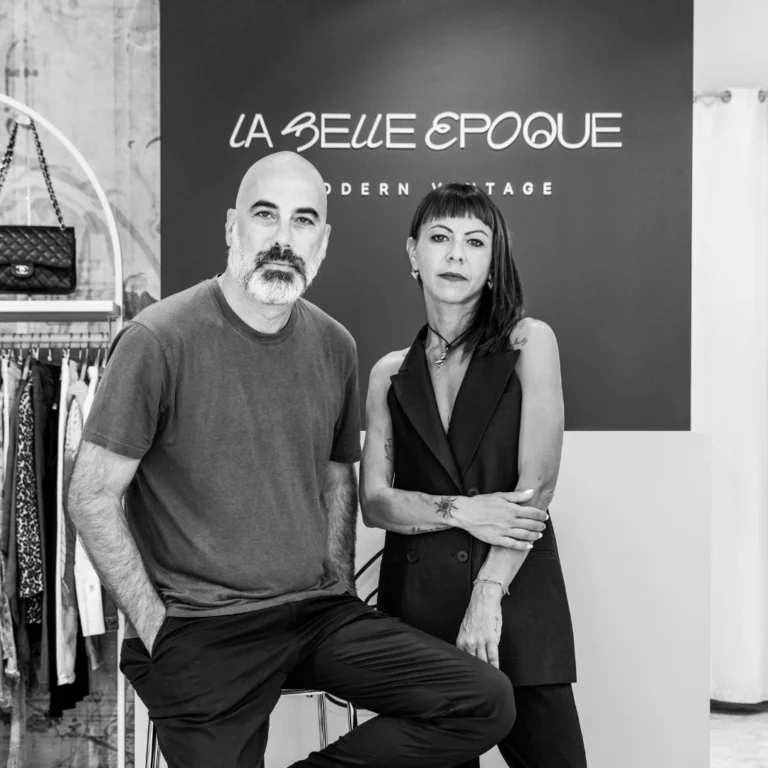
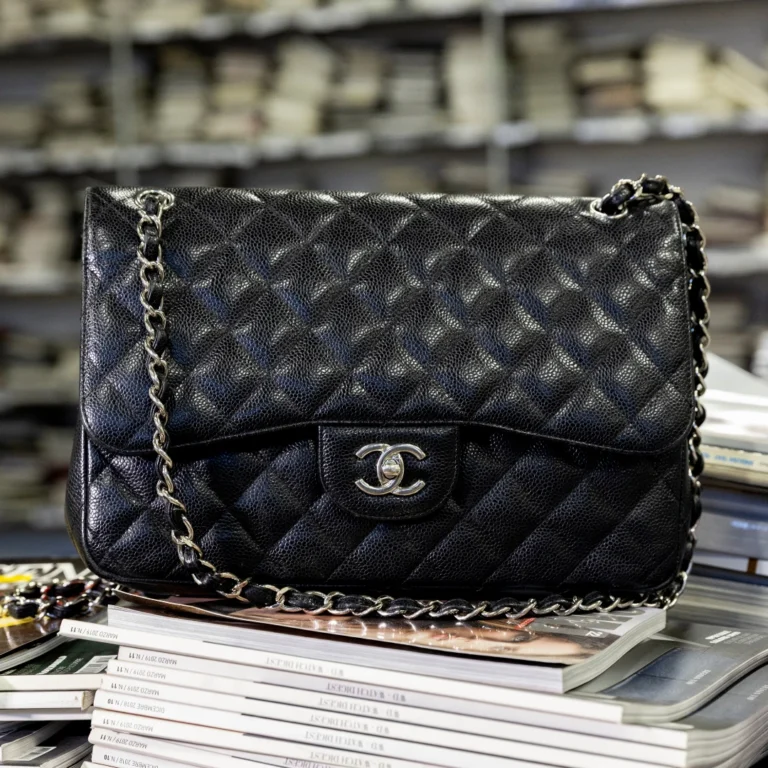
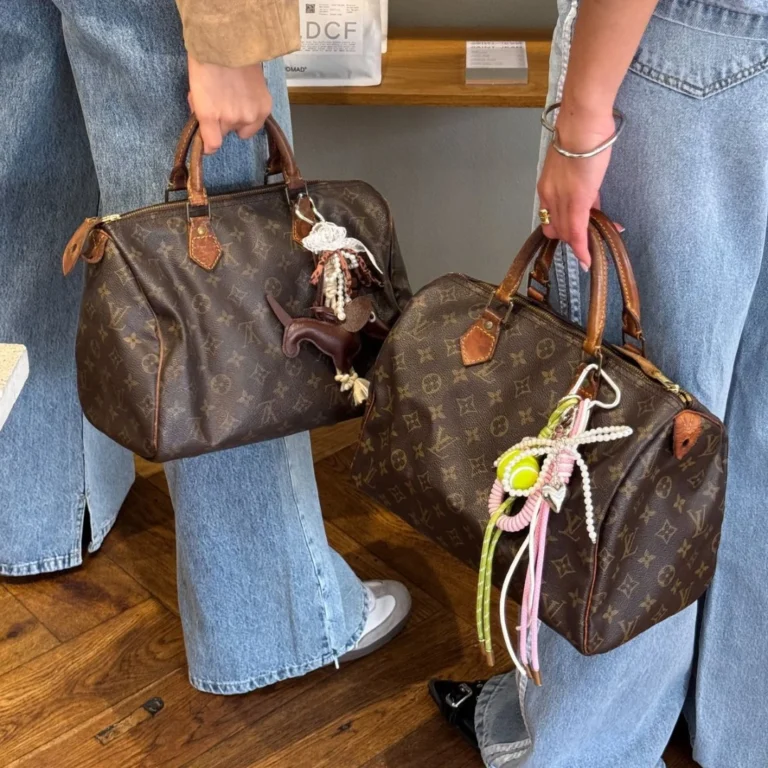
Many stories can be hidden behind a single dress; stories made of passion, hard work, and encounters.
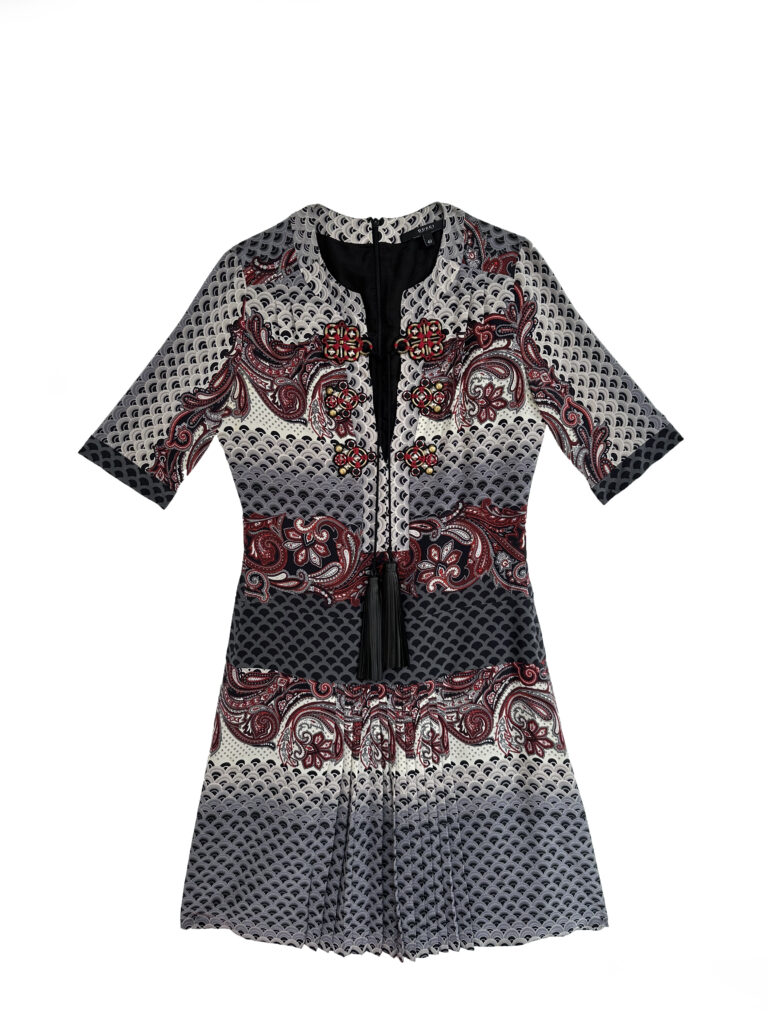
And that is exactly what happened on an ordinary Wednesday morning. Our Archive window display had just been set up, and a Gucci dress from the Fall Winter 2008 collection was hanging on the right corner.
Linda, coincidentally free from her work commitments, was walking with a friend when she stopped in front of our window, surprised by what her eyes caught: everything began with this encounter.
The story of this piece held a special meaning for her, which she wanted to share with us. For the first installment of this fashion conversation series, our “LBE Archive Talk” column, we interviewed Linda, and when we met to delve deeper into her stories, she surprised us by bringing an invaluable collection of her work: a catalogue with photos, sketches, articles, and models, all regarding her creations for the various brands she has collaborated with over the years.
What does this dress mean to you?
The dress we are looking at evokes strong emotions and memories: it was my very first dress made for Gucci more than fifteen years ago. I had only recently joined the company and I was so eager to prove myself; I came from different experiences, moving from Cavalli to Dolce&Gabbana (a period during which she shared a house in Florence with a young intern, Olivier Rousteing editor's note), but Gucci was always Gucci, and the expectations were truly high.

What was your role in the company?
I was hired as a senior pattern maker, a technical role that translates and makes the designers' creativity possible.
Our work is closely linked to the design office: once the sketch is produced, it is passed to us, and we begin creating the pattern.
I have a beautiful memory of Peter Dundas, during his time as Chief Designer at Roberto Cavalli, related to our role as pattern makers: he was one of the few who valued and gave proper recognition to the work performed; the models I produced became “Linda's dresses”, recognizing the dedication and effort of myself and the technical team in making his ideas a reality.
Let's just say that normally, as in every job, if the dress turned out well, it was thanks to the designers, but if it turned out poorly, it was the fault of the technicians who hadn't quite captured the idea.
Where did the idea for this model come from?
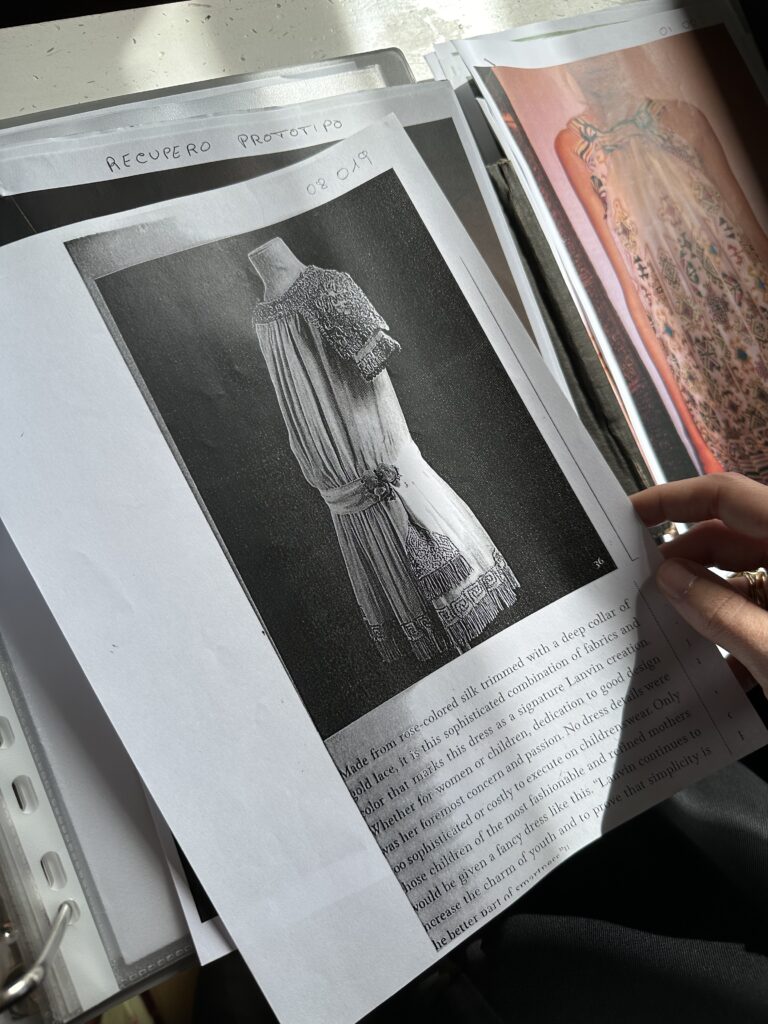
“Made from rose-rose-colored Silk trimmed with a deep collar of gold face, it is this sophisticated compilation of fabrics and color that mark this dress as a signature Lanvin creation”.
(Excerpt from the caption accompanying the image, editor's note)
When the collection was explained to me, they had included a photograph of a 1920s Lanvin dress attached to the sketches, which they had used as inspiration for the line; it was rich in details and embroidery, with a typically low waist and a waist sash.
The entire collection we were working on was rich in details, trimmings, and embroidery—a true conversation on folkloric fashion.
What is the structure of the model?
The dress has a linear structure: the shoulders are narrow and allow for slightly reduced mobility because the motto was “the Gucci woman doesn't take the tram.” This phrase is quite significant in understanding the concept of the woman proposed in those years: a busy, independent, confident, and successful woman, and therefore not forced to use public transport.
The shoulders had to be small, even at the risk of being flawed; it was one of the key points in creating this model, but by working extensively on it, I managed to “fix” the model and make it perfect.
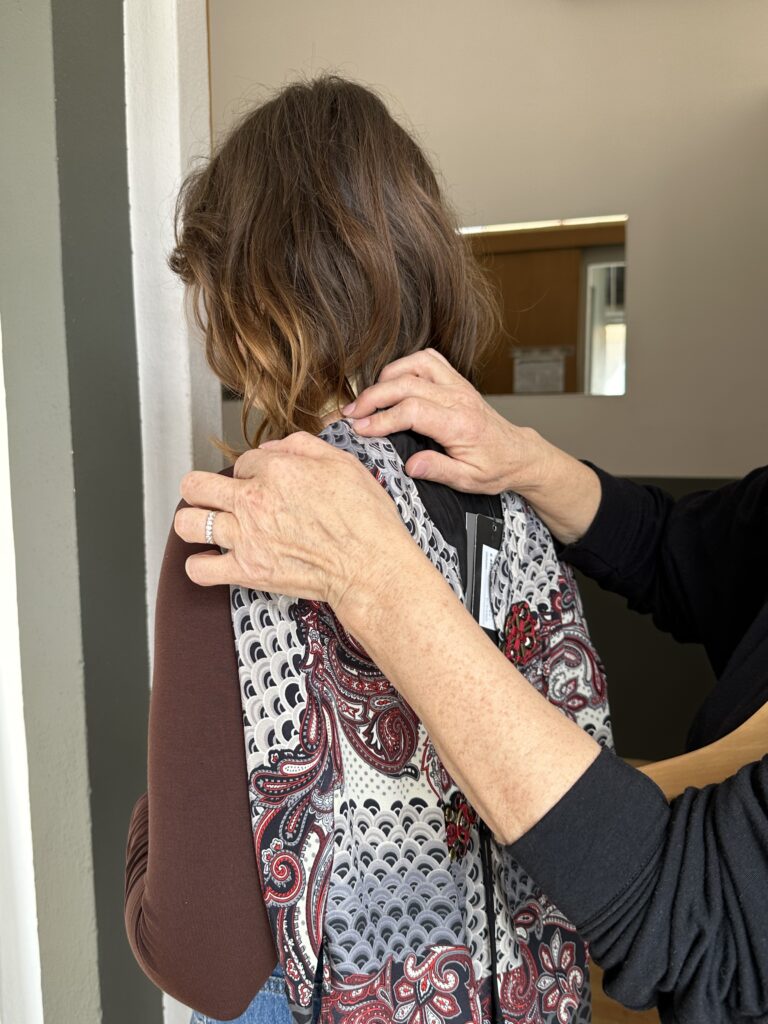
The waistline was slightly lowered, as in 1920s models, and accentuated by a peplum from which a straight skirt with central pleating emerged; we hid pockets on the hips, an element loved and proposed in many models by Giannini because it provided a “practical ease” that she believed was fundamental.
What was the most difficult thing to realize for this model?
One of the most critical steps was after the first fitting: the dress had been approved by the design office and assigned a printed fabric. Together with a product colleague—a figure who works closely with the design office—we laid out the various pieces that make up the dress: front/back, peplum, sleeve, etc. The difficulty lay in positioning the print as best as possible, trying to make it match the designs. Since it was a fabric with different prints, we had to find strategic points to best position each one. We thus opted for the cashmere print on three bands to allow the dress to be sectioned: the first on the shoulders, the second at the waist, and the third just below the peplum.
Once the choice of the various designs was approved, we did a second fitting to see the almost finished model.
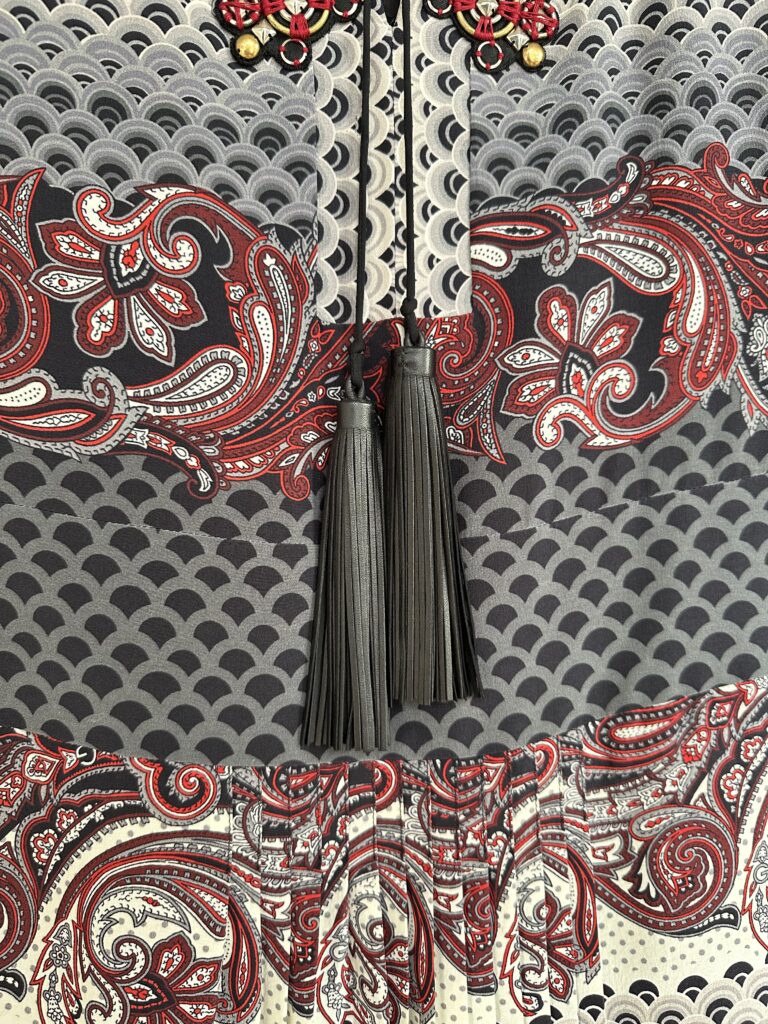
On the V-neckline, six embroideries with gold studs were placed to echo the embroideries of the Lanvin dress, and on the two upper ones, we applied two leather laces with tassels at the ends.
Do you remember if the dress and the collection were appreciated?
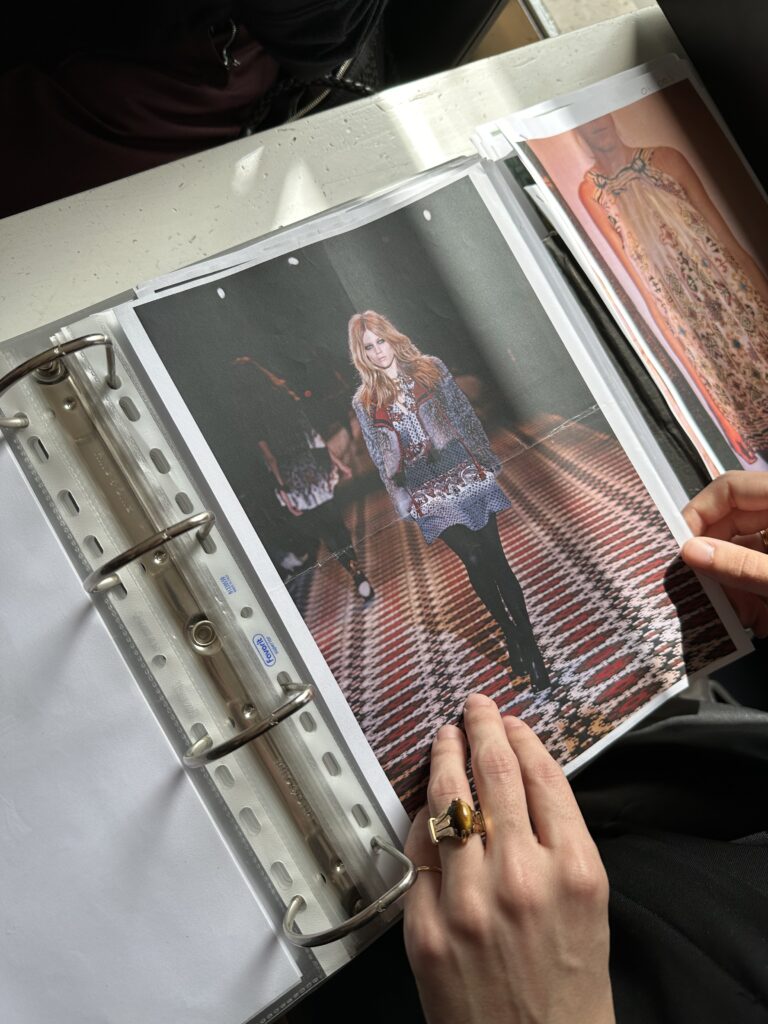
I remember it was very well received; it was worn by Charlize Theron for an event and appeared in various editorials, including Fort Lauderdale. It was also displayed in the Gucci boutique in Venice during the Film Festival.
What are you focused on now? Do you have any projects?
After Gucci, I worked for several companies, one of which left an indelible mark on me was undoubtedly Alexander McQueen. It was the place where I had the most fun and felt most stimulated to create models; the complexity of the ideas and sketches was very high, so you had to give your all to translate them perfectly.
Now, instead, I am working with an emerging designer on a streetwear collection; I like to challenge myself with new things, and this field is somewhat distant from everything I have done so far, which is why I like it so much.
Our fashion conversations will return soon with new interviews and insights into the archives of the best brands.
Follow us on Instagram to stay updated on news and our new arrivals!