Born in Milan and adopted by Panama, Patrizia Pagan de’ Paganis is a woman who has made fashion her journey.
Travel, in fact, is a fundamental element in defining Patrizia, a “leitmotiv” in her life that has brought significant changes.
Raised in Milan, she studied at the Marcellines (a well-known Milanese institute editor's note) where any aspiration toward less conventional jobs was absolutely discouraged. Her dream was to become a flight attendant to travel the world but, as was the case with the proposal to become a Mannequin (what is today defined as a model editor's note), her family was opposed and forbade her from pursuing these careers, which were considered undignified.
Patrizia therefore decided to pursue her studies and, after graduating in Foreign Languages and Literatures at the Università Cattolica di Milano, moved first to Sicily, then to Rome, and finally to Viareggio. After returning to Milan, she began searching for a job and a way to establish herself.

How did your career in fashion begin?
Leveraging my degree in Foreign Languages, I started working in showrooms for Walter Albini as an interpreter for buyers. Working for the genius behind the birth of prêt-à-porter could not have made me more enthusiastic: it was 1983, just months after his passing. I worked for several brands until I arrived, quite by chance, at Vogue Italia, handling advertising sales and later becoming the head of editorial-advertising relations, working on photo shoots and campaigns for clients.
What was the atmosphere at Vogue during that period?
It was a fantastic era; during that period, all the biggest names were launched, such as Armani, Versace, Krizia, and Ferré; we were surrounded by absolute prosperity and an incredible joie de vivre that inevitably characterized the entire city of Milan in the '80s.
There was an air of creative and economic freedom thanks to the major advertisers whose budgets made even the most complex ideas possible. I had the privilege of working with both Sozzani sisters (Franca and Carla editor's note.) on advertising campaigns: I observed them and learned everything about how the fashion world worked.
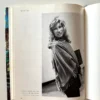
In 1991, I went to New York to work on a special feature on American designers for Vogue Italia, and on that occasion, I was photographed for a book dedicated to Italian fashion insiders: photographers, PR, and creatives. The book aimed to show the differences in style between the various cities of our Peninsula, including Milan, Rome, and Florence.


Images from the book “Italian Chic” by Susan Sommers, 1992.
How did your career in the fashion world continue?
In the early '90s, a friend and I decided to found our own communications agency, and I brought with me several clients who had become very loyal during my time at Vogue, such as Rena Lange, Gentry Portofino, Ritz Saddler, Coin, and Saverio Palatella for the fashion sector, while for the jewelry and watches section: Corum, Chaumet, and Chopard.
It was a very stimulating and busy period; I never stopped!
However, towards the end of the '90s, the atmosphere changed; some companies began to want in-house press offices, and so we began to lose many clients.
How did you react to this change of course?
Obviously, I didn't lose heart. My husband, a sailing enthusiast, had already completed two world tours in regattas, during which I would join him by plane at various stages. He wanted to set off for his third world tour, and this time I decided to join him: we set off solo with a small crew, including our sailor who fell madly in love with my best friend, who was also on board. Once we landed in Panama, the two lovers decided to stay there, so we had to look for other people to replace the crew, and also to wait for the ideal conditions to attempt the crossing again.
It was 2002, and it goes without saying that we never set sail again.
How did you manage to reconcile your passion for fashion with this radical lifestyle change?
For a while, I continued to work remotely, but at the time it was truly too complex, so, very naturally, I decided to focus on our new life in Panama.
Fortunately, within a short time, we began to create new contacts, thanks in part to Italian ambassadors; having worked in fashion and coming from Milan, I began to have many connections in the sector that allowed me to achieve professional successes, even in a country where I never thought I could continue my profession.
I began to be part of the Fashion Council for Panamá Fashion Week, which every year awards the best Panamanian designer—a sort of award to launch the new promises of the Panama fashion scene.
We follow them during the creative process, providing targeted consultancy to ensure their collection is concrete and marketable. Now, I have also started working with a team to assist the First Lady of Panama. We have reviewed her entire closet and, with the schedule in hand, depending on the appointments, we prepare a technical sheet with photos of various outfits for every occasion.
Where do you see yourself in the near future? Would you return to living in Milan?
My life and my heart are now in Panama: here the atmosphere is calmer and life is slower. I have the opportunity to achieve professional and personal goals that would be much harder to reach in Italy. Every time I return to Milan to visit my sister, I realize that everything is more complex and cumbersome, and that for a young person entering the fashion world for the first time, a path like mine and that of my colleagues is not immediate. However, one must not be discouraged; print media will find a way to adapt to these new changes, to reinvent itself and return to the joie de vivre I experienced when I entered Condé Nast.

Our fashion conversations will return soon with new interviews and insights into the archives of the best brands.
Follow us on Instagram to stay updated on news and our new arrivals!