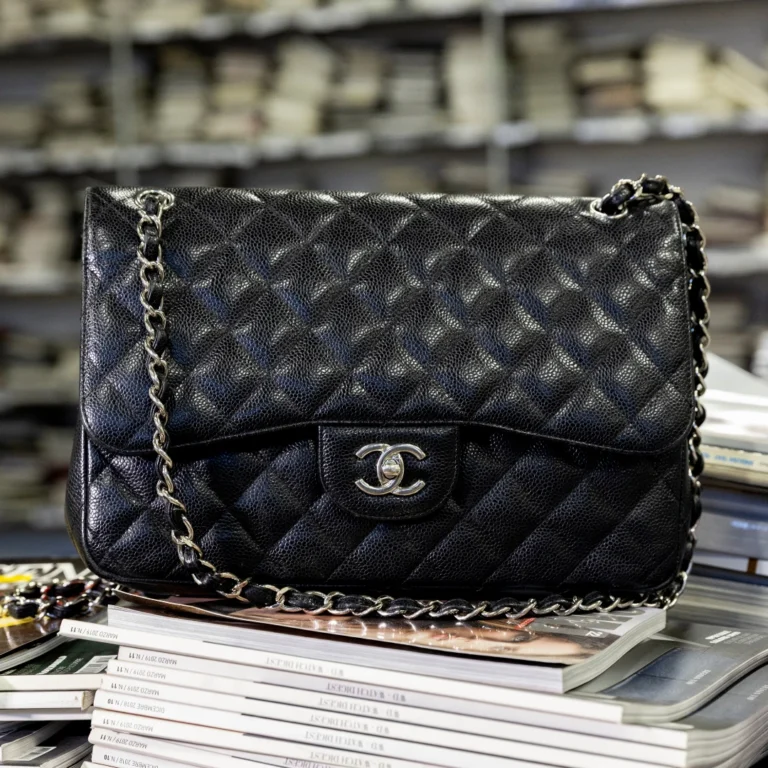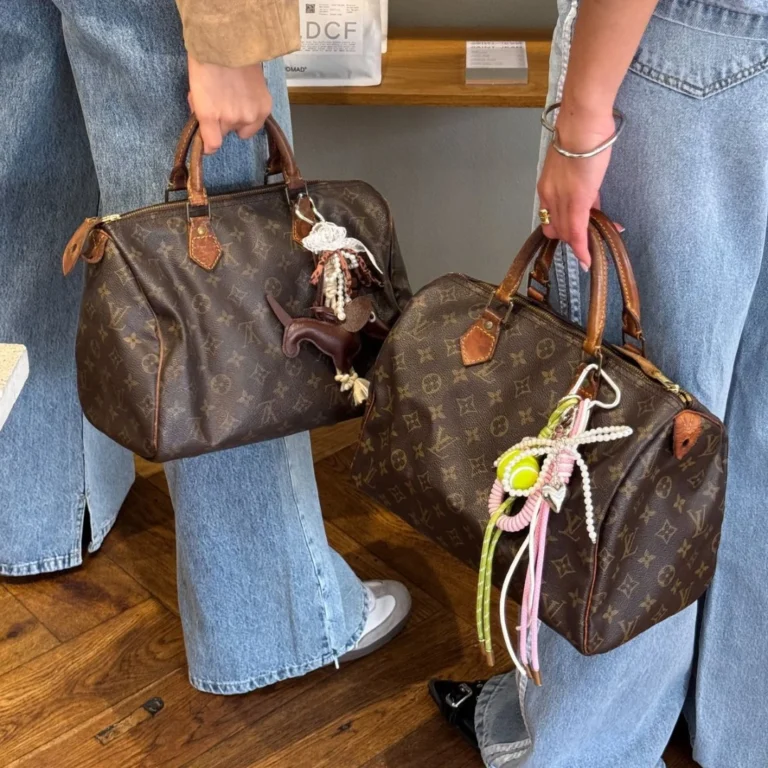
If you are used to shopping online, you have surely come across advertisements or websites where famous and very expensive brand products are sold cheaply: the truly convenient price may have piqued your curiosity, but looking closely at the product photos, something doesn't add up. Sometimes it is very easy to identify copies of luxury brand items and accessories, the so-called “fakes”; in other cases, however, replicas are made so accurately that it becomes difficult to distinguish a fake.
In this guide, we explain the fundamental points to consider to recognize an original Louis Vuitton bag.
Take notes, because these indications could save you from unpleasant scams!
The Monogram elements
The typical pattern of original Louis Vuitton bags is called “Monogram” and must necessarily include the following elements:
- The “LV” initials
- The solid “Fleur de Lis”
- The circled flower
- The hollow “Fleur de Lis”
If a bag does not feature all these elements or only features some of them, and they are not exactly identical to those of the brand, it is certainly a fake Louis Vuitton bag.

The stitching
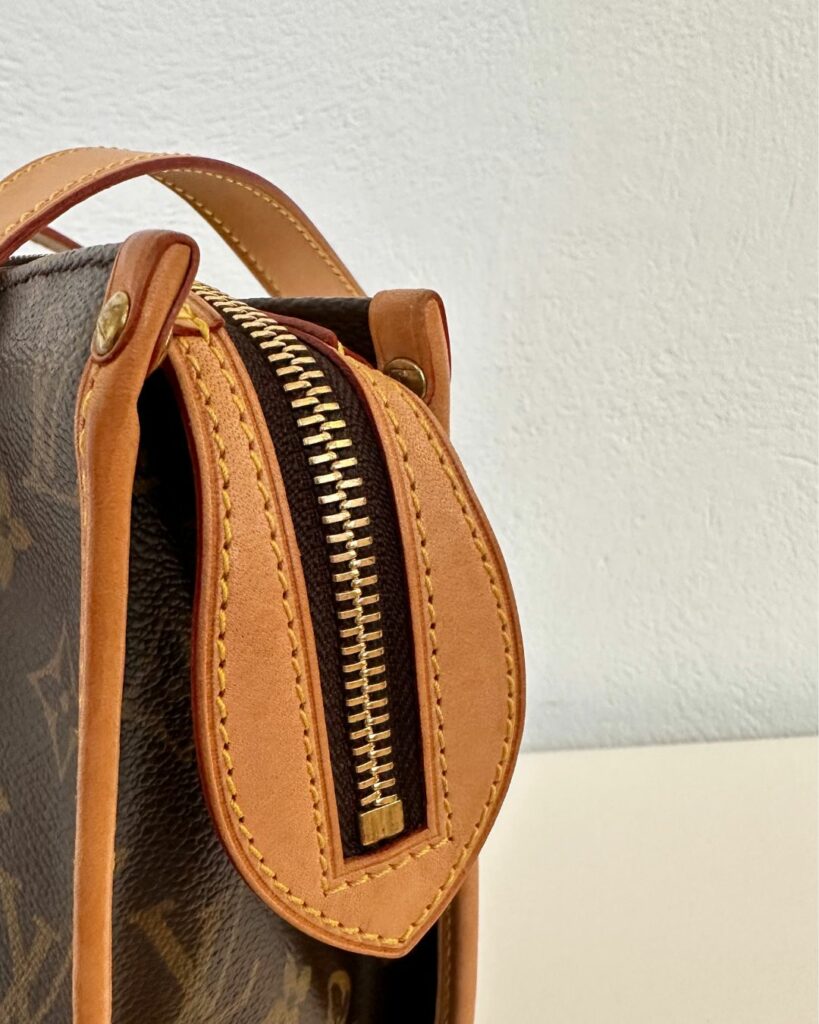
The stitching found on the leather parts is a fundamental element for recognizing an original Louis Vuitton bag.
This stitching must be mustard yellow in color and must consist, on every handle or strap of the bag, of the exact same number of stitches. Any bag featuring stitching of a different color, whether a brighter or more orange yellow, is to be considered fake.
The metal parts
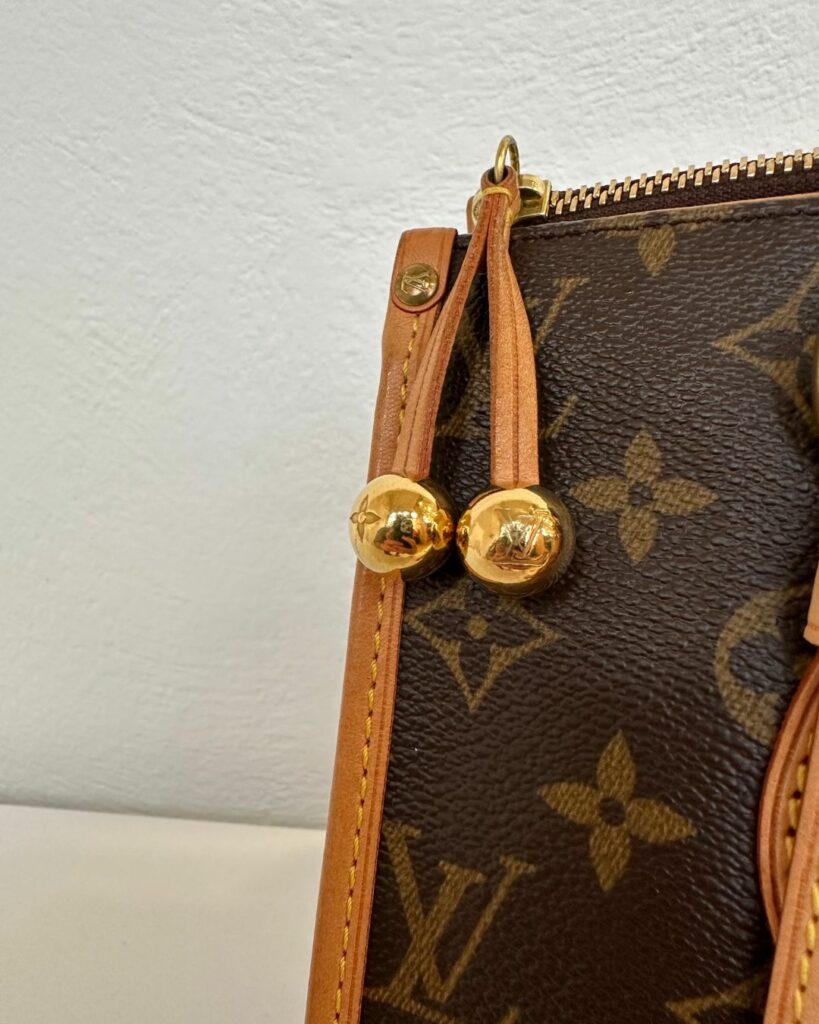
All the metal parts of Louis Vuitton bags, from buckles to locks, are made of gold brass; they are all “branded,” meaning the logo is clearly engraved and they are particularly heavy to the touch, precisely because they are made with high-quality metal. Therefore, remember to carefully observe these elements and feel their weight to recognize an original Louis Vuitton bag.
The “LV” logo
Louis Vuitton, like every luxury brand, has great respect for its heritage and particularly for its logo. This is precisely why every bag is positioned and cut on the monogram pattern canvas so that the “LV” logo is never cut or interrupted by seams and/or applications. It may happen that other monogram elements (the solid or hollow Fleur de Lis and the circled flower) are cut, but this never happens to the “LV” letters, which always remain clearly visible on every bag model and in both small and large leather goods.

The code
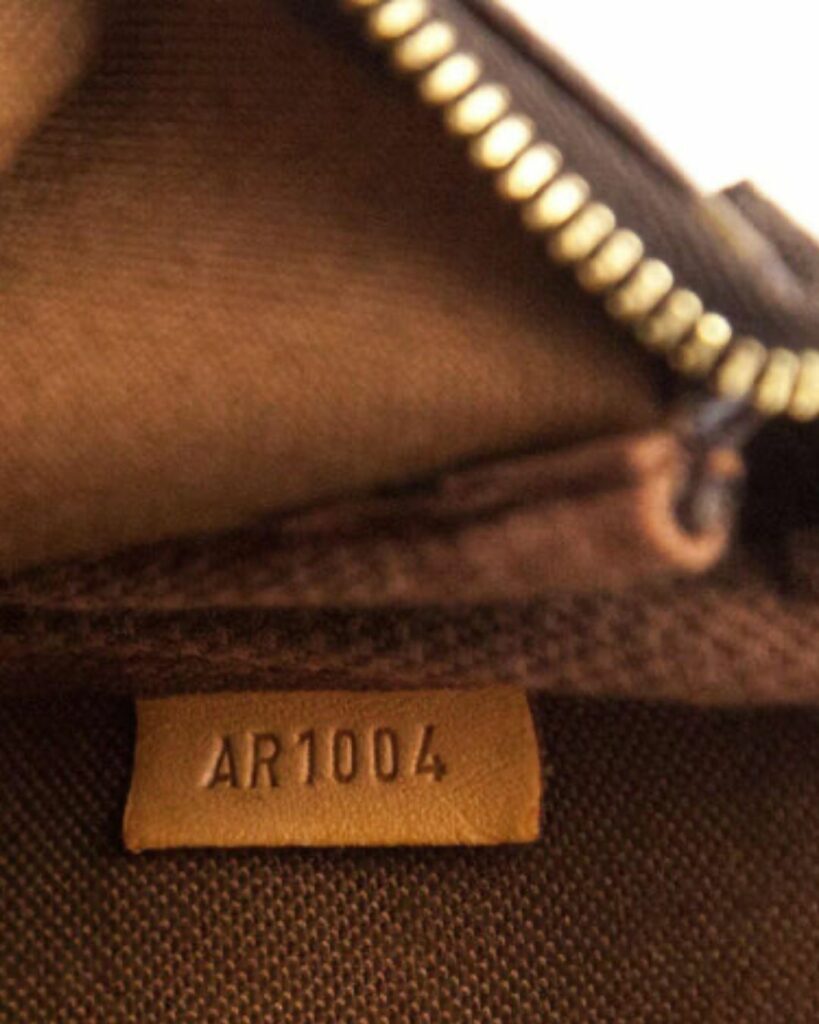
Starting from 1982, Louis Vuitton began to include an identification code inside the bags. This number allows for the identification of the bag model, but also traces back the year and the country of production.
Where is the code located? The position of the code depends heavily on the bag model and the year of production; it is usually engraved (not printed) in the corners, inside the pockets, or on leather tabs, always inside the bag. Over the years, however, the French brand has changed the way its codes are created, but with the following scheme, it will be very easy to recognize an original Louis Vuitton bag:
- From 1982 to the mid-1980s, Louis Vuitton bags featured a code of 3-4 digits, which followed the scheme AAM or AAMM (so the first digits indicate the year and the last indicate the month of the bag's production).
- From the mid to the end of the 80s, the country of production was also introduced. The code for bags produced during this period therefore follows the scheme AAMM + two letters indicating the country of production.
- From the early '90s until 2006, the letters indicating the country of production were moved to the beginning of the code, following the numbers indicating the month and year of production, according to this scheme: two letters indicating the country of production code + MAMA (so the first and third digits indicate the month and the second and fourth indicate the year of the bag's production).
- From 2007 to February 2020, the week the Louis Vuitton bag was produced was introduced instead of the month. The scheme is as follows: two letters indicating the country of production code + SASA (the first and third digits indicate the week of the production year, which is identified by the second and fourth digits of the code).
- Starting from March 2020, all bags and leather goods feature a microchip in the bag lining. The NFC (Near Field Communication) are invisible microchips inserted inside the new Louis Vuitton bags. Unlike classic date codes, which are readable at a glance, these chips require a specific application to be read via smartphone, making immediate product verification more complex. Currently, the chip scan can be performed with an app exclusively for Louis Vuitton employees. As with the traditional code, the chip also indicates the country and date of production but can provide other useful information, such as where the bag was sold. In this way, the French brand aims to definitively combat the counterfeit market, but it is not certain that even this more complex and technological method is totally excluded from the risk of counterfeiting. It is always good to keep in mind all the elements used to recognize an original Louis Vuitton bag.
In summary, here are the fundamental points to keep in mind when observing a Louis Vuitton bag to understand if it is original:
- The Monogram and its elements;
- The stitching;
- The metal parts;
- The “LV” logo;
- The code;
In this guide, we have seen what to consider to be able to recognize an original Louis Vuitton bag.
However, replicas are becoming increasingly well-made and distinguishing a genuine product from a fake can prove very complex.
For this reason, we always recommend turning to specialized experts like us, in order to avoid unpleasant scams.
Discover the selection of Louis Vuitton bags on our site; here you can find the most classic and iconic models as well as exclusive collaborations. If you prefer expert advice, instead, come visit us in our boutiques in Milano, Como, and Legnano and let our sales assistants help you find the perfect bag for you.