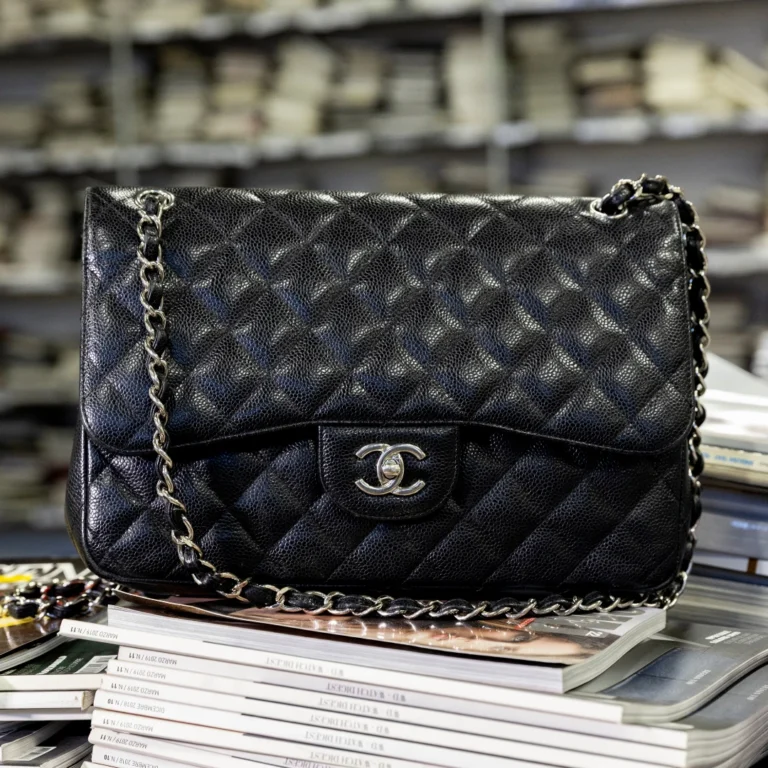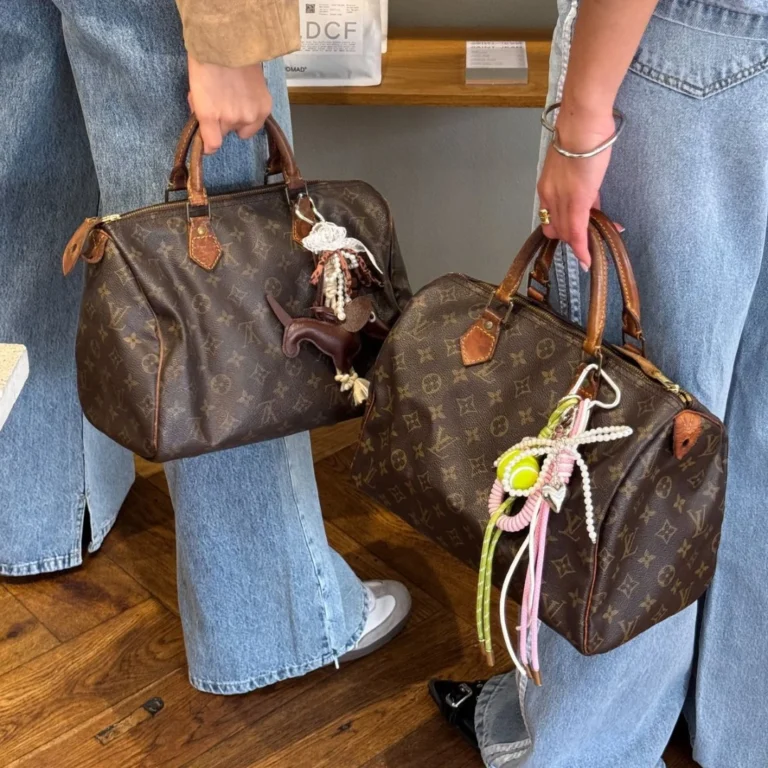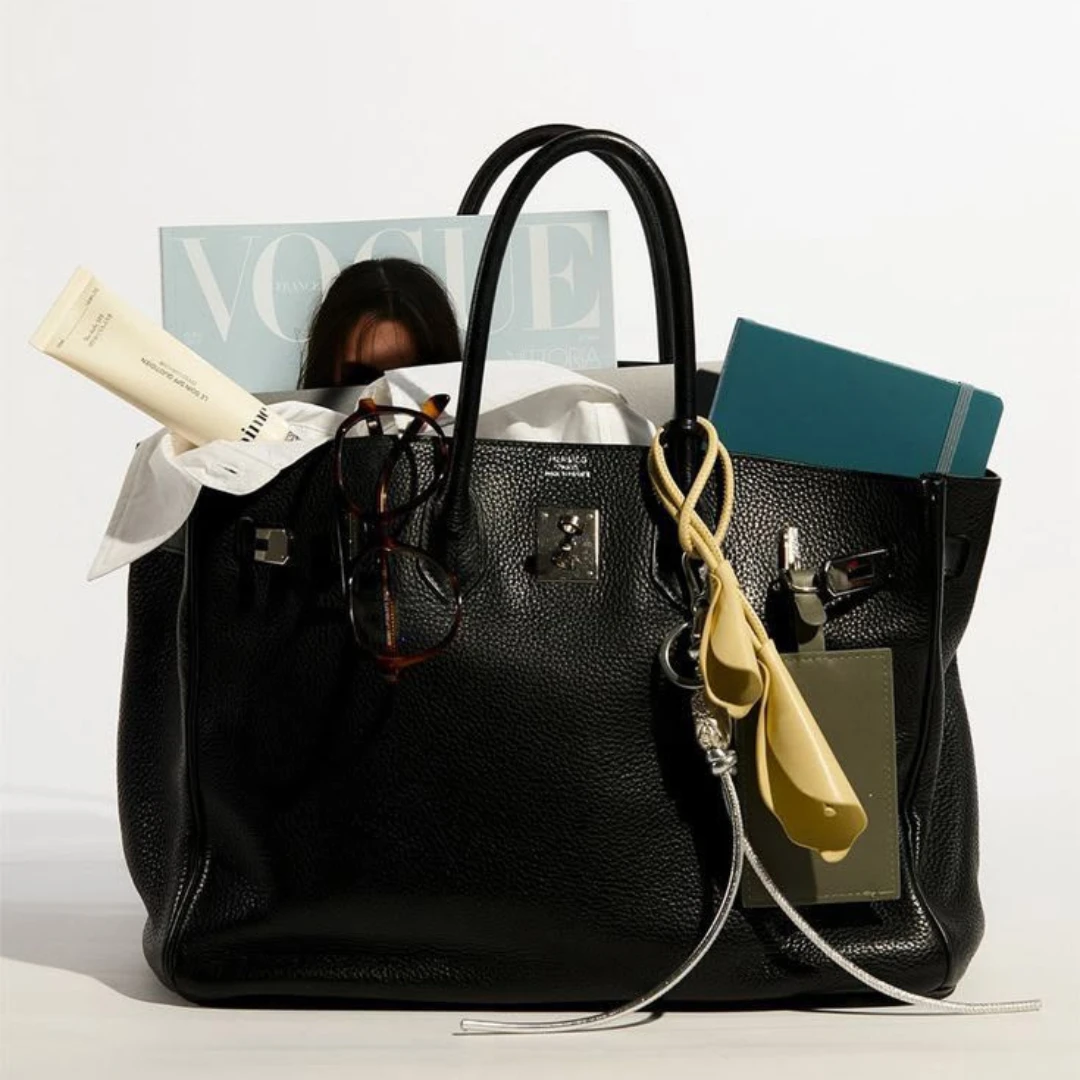
Few fashion houses have achieved the almost mythological status of Hermès. A Birkin or a Kelly are not simply bags: they are collector's items, investments that maintain, and often increase, their value over time. For this very reason, Hermès is today one of the most imitated brands in the world, and the counterfeit market has reached a level of sophistication that can deceive even an untrained eye.
We work every day with luxury vintage and second-hand items in our boutiques in Milano, Como, and Legnano, examining hundreds of Hermès pieces each year before they enter our selection. In this article, we share the criteria our authentication team uses in practice to help you recognize an original Hermès and avoid falling into the trap of a counterfeit, even a very well-made one.
Why Hermès is the most counterfeited brand in the world
Hermès production is artisanal, limited, and extraordinarily slow: a single Birkin can require up to 18-24 hours of manual labor by a single artisan. This translates into endless waiting lists, extremely high retail prices, and a secondary market where values can exceed the original price. It is the perfect equation to attract counterfeiters: high demand, scarcity of supply, and enormous profit margins. The result is increasingly sophisticated replicas, capable of imitating logos, hardware, and even serial codes. This is why knowing what to look for, in detail, truly makes the difference.
1. The leather: the first clue, often the most overlooked
Hermès uses selected leathers with precise names: Togo, Epsom, Clemence, Swift, Box Calf. Each has a specific grain, weight, and tactile response. Original leather has a soft yet structured texture, a regular and natural grain, and the scent of full-grain leather, never chemical or "plastic-like".
Imitations, even the most expensive ones, tend to use synthetic leathers or lower-quality skins treated to look more premium: the grain often appears too uniform and "stamped," the surface excessively shiny or, conversely, stiff and lacking elasticity to the touch. If a bag does not "breathe" like leather, it is already a first warning sign.
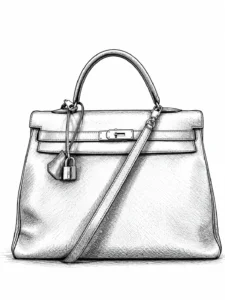
2. The stitching: the true signature of craftsmanship
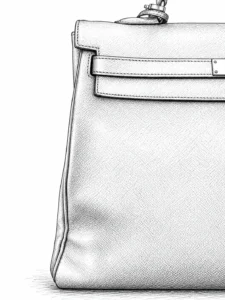
Stitching is one of the most difficult elements to replicate correctly because, on an original Hermès, it is handmade using the famous saddle stitch: it is performed with two needles and waxed thread, working simultaneously on both sides of the leather. The result is an extremely durable stitch with a visually perfect pattern. The distinguishing feature: the tension is not identical on both sides — one side is slightly tighter than the other. In fakes, the stitching is machine-made with a lockstitch, which appears symmetrical on both sides — paradoxically, a stitch that is "too perfect and symmetrical" can be a sign of a counterfeit.
3. The hardware: weight, plating, and engravings
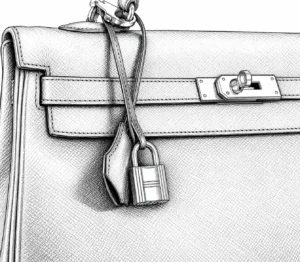
Hermès hardware is gold or palladium plated and finished with almost surgical precision. Key signs to check:
- The weight: original hardware is generally heavier and feels more solid to the touch compared to imitations, which are often made with lighter metals.
- The engravings: the "Hermès Paris" inscription engraved on the buckles must have sharp, uniform, and perfectly aligned characters, without any blurring.
- Durability over time: original plating does not peel easily; if you notice early oxidation or gold plating coming off in patches, it is a very suspicious sign.
5. The logo and typography
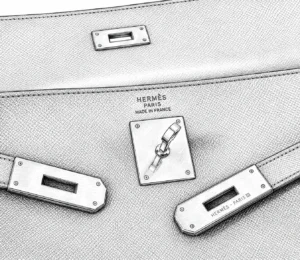
The font used by Hermès for its logo and internal engravings is distinctive and consistent over time. Letters that are too thick, too thin, irregular spacing, or imprecise alignment relative to the center of the stamp are signs not to be underestimated, especially when compared to a piece of certain provenance.
6. The date code or stamp
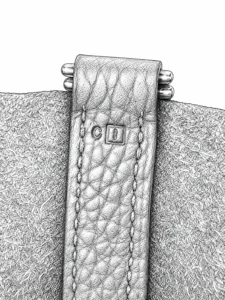
One of the most useful, yet most misunderstood, tools for verifying a Hermès is the so-called date stamp, heat-stamped inside the bag, usually near one of the side seams or under one of the flaps.
Key points to know:
- The stamp must be crisp, with clean edges and a uniform depth of engraving, consistent with the rest of the bag's finishes.
- The letter and shape must be consistent with the model and other construction details: a code indicating a production year incompatible with the hardware style or the type of leather used is a warning sign.
- Caution: a "correct" serial code alone is not enough to guarantee authenticity. The most sophisticated counterfeiters are able to replicate the date stamp as well, which is why this element must always be analyzed alongside the leather, stitching, hardware, and general proportions, never in isolation.
7. How to read the Hermès code
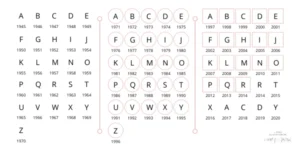
From 1945 onwards, Hermès uses a system where a letter of the alphabet is enclosed within a geometric shape (circle, square, triangle, rhombus...) and each letter-plus-shape combination corresponds to a precise year of production. The Hermès stamp corresponds to the production year of the item and is different from a serial number, as all items made in a year receive the same stamp.
Use the image below to match each letter to its year of production.
8. The price: if it seems too good to be true, it probably is
Hermès bags, even second-hand, maintain rather stable and well-documented market values. A price drastically lower than the market average for an equivalent model and condition is almost always an indication of a problem: it could be a fake, an undeclared damaged piece, or unclear provenance. Always be wary of "too good to be true" offers, especially on general marketplaces where professional authenticity control does not exist.
9. Always rely on professional authentication
The combination of all these elements — leather, stitching, hardware, details, date stamp — requires an expert eye and constant comparison with certain archives and reference pieces. This is exactly the work our team performs daily on every Hermès bag that enters our selection, before it is offered to our clients online or in our boutiques. Serious authentication is never based on a single clue, but on a cross-check of all the construction details of the piece.
Discover our selection of authentic Hermès bags
Buying a vintage or second-hand Hermès bag should be a secure experience, not a game of chance. Every piece in our selection is authenticated by our team of experts before being put up for sale, so that you can choose with complete peace of mind.
Come and discover our collection of authentic Hermès bags in our online boutique or visit us directly at our boutiques in Milano, Como, and Legnano: our staff will be happy to guide you in choosing the right piece for you, telling you the story and characteristics of every selected bag.